Decorated cookies are one of the easiest bakes to underprice. The ingredients are cheap, the cookies are small, and it feels strange to charge several dollars for something that fits in your palm. But royal icing work is slow: flooding, drying, detailing, packaging each cookie individually. This guide shows how to price decorated cookies so that time is paid for, and compares them with simple cookies to show exactly where the difference comes from.
How much should you charge for a dozen decorated cookies?
Charge for decorated cookies by adding ingredients, packaging, your decorating time at an hourly rate and a little overhead, then adding profit and dividing by the number of cookies. In the worked example below, 24 royal icing cookies taking 5 hours come to about $7.86 each — around $94 a dozen — while simple drop cookies come to about $1.51 each.
Those numbers aren't a market rate — they're what those specific costs and hours work out to. Your own price will depend on your time, design complexity and local market.
Why does decorating time matter so much?
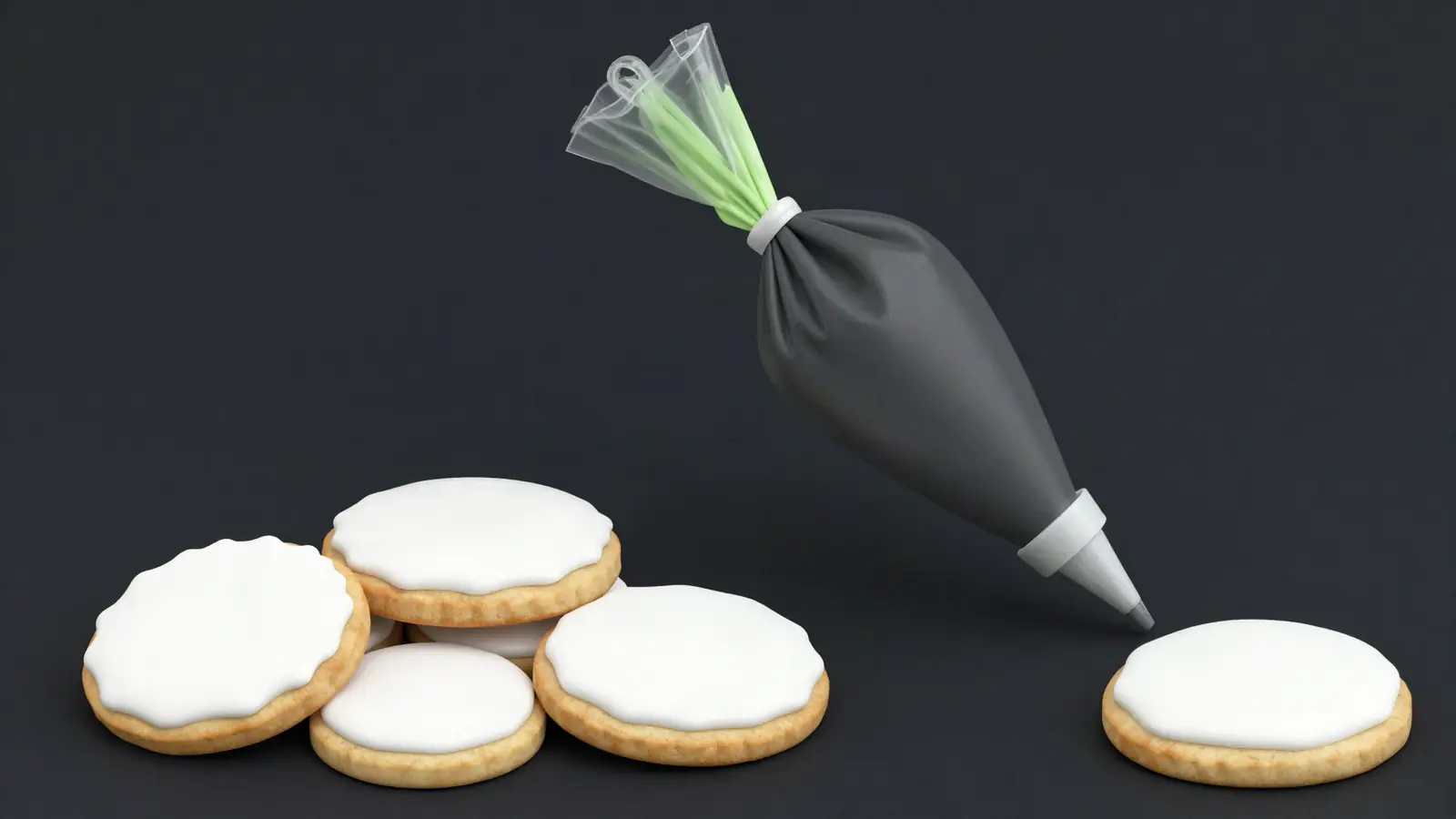
Because the ingredients barely change between a plain cookie and a detailed one, but the hours do. Royal icing cookies often involve:
- Baking and cooling the cookies.
- Mixing and coloring icing in several consistencies.
- Outlining and flooding, then waiting for layers to dry.
- Detail work — piping, painting, lettering.
- Packaging — often individually heat-sealed bags, plus boxes and labels.
If you only charge for flour, butter and sugar, you're giving that time away.
How do decorated and simple cookies compare?
| 24 decorated cookies | 48 simple drop cookies | |
|---|---|---|
| Ingredients | $12.00 | $10.00 |
| Packaging | $8.00 | $6.00 |
| Your time (at $20/hour) | 5 hours = $100.00 | 1.5 hours = $30.00 |
| Overhead (10%) | $12.00 | $4.60 |
| Total cost | $132.00 | $50.60 |
| Price at 30% margin | $188.57 | $72.29 |
| Price per cookie | $7.86 | $1.51 |
| Price per dozen | $94.29 | $18.07 |
The simple cookies use nearly the same ingredients per batch, and the batch is twice as large. The decorated cookies cost more because they take more than three times as long to make half as many.
How do you price different design levels?
Many cookie decorators use tiers rather than pricing each order from scratch:
- Simple — one or two colors, basic shapes, minimal detail.
- Standard — several colors, some piping or lettering.
- Detailed — hand painting, fine lettering, multiple layers or complex characters.
Time a batch at each level once, run it through the same cost method, and you'll have per-dozen prices for each tier. Custom-cut shapes or new stencils can be added as a one-off design fee. The same tiered approach works for pricing cake pops by the dozen, where dipping and decorating time drives the price.
What about packaging and presentation?
Individually wrapped cookies look professional and travel well, but bags, boxes, ribbons and labels add up — and wrapping each cookie takes time. Count both in your costs. If a customer wants gift boxes or custom tags, price those as extras rather than absorbing them.
How do you check your price against the market?
Look at what other decorated-cookie sellers near you charge for similar designs. If your cost-based price is much higher, look for time savings (fewer colors, reusable designs, batch-decorating the same design) before cutting your hourly rate. If it's much lower, you may be underpricing work people already value.
Related guides cover how much to charge for sourdough bread and how to price custom cakes per serving.