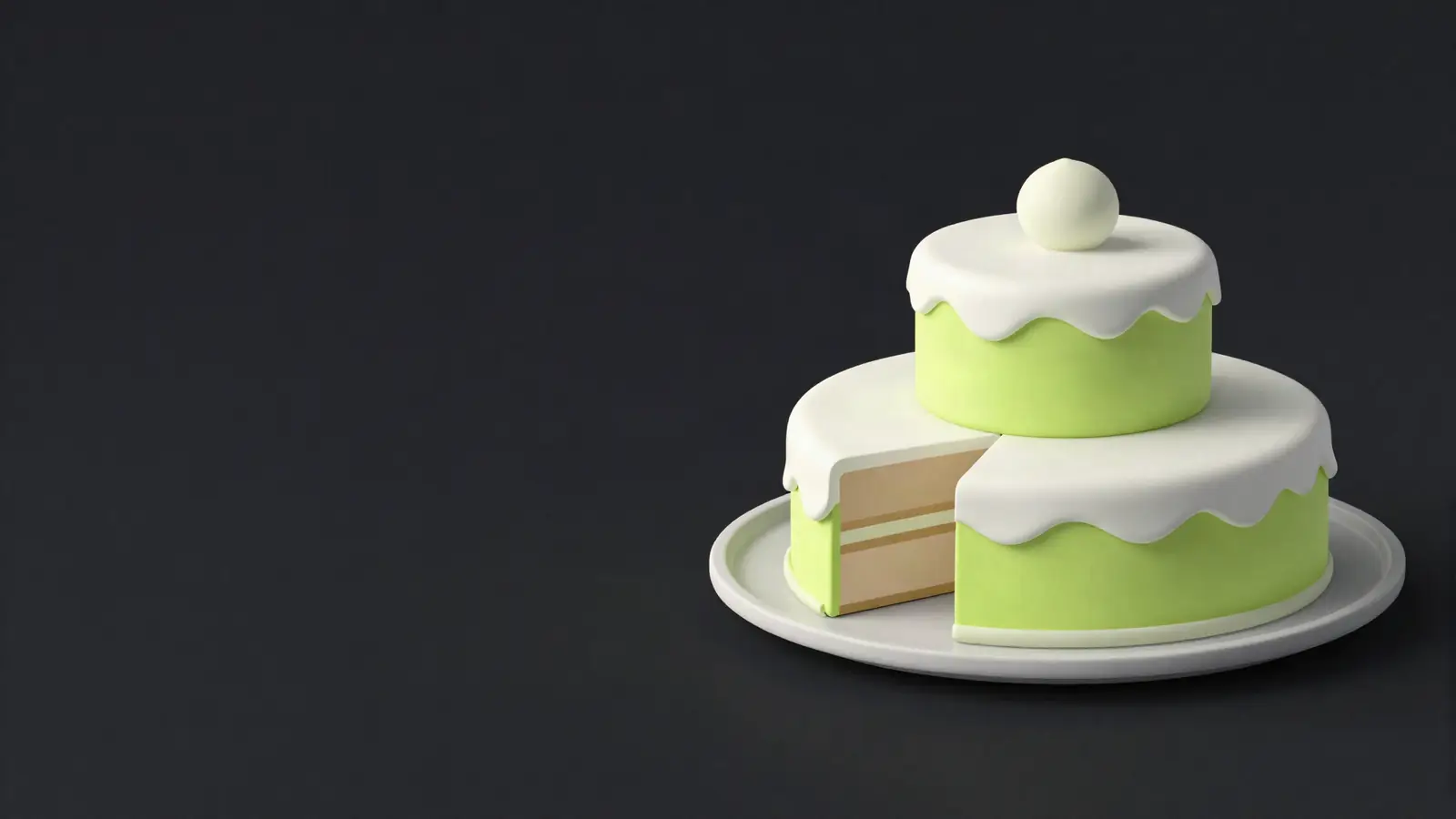
Custom cakes are one of the hardest things for home bakers to price. Every order is different — size, tiers, flavors, decoration — and it's tempting to just guess. Pricing per serving solves a lot of that, because it scales naturally with the size of the cake and gives customers a simple way to compare options. This guide explains how per-serving pricing works, why serving size changes everything, and how to calculate your own per-serving price.
What does "price per serving" mean for cakes?
Price per serving means quoting a cake by how many people it feeds rather than by its pan size. You work out the total cost of the cake — ingredients, packaging, your time and overhead — add your profit, and divide by the number of servings. A 24-serving cake costing $125.40 to make, priced at a 30% margin, comes to about $7.46 a serving.
Customers understand it immediately ("it feeds 24, so it's about $180"), and you can quote bigger or smaller cakes without starting from scratch.
How many servings does a cake actually make?
This is where many bakers go wrong: the number of servings depends on how big each slice is. Wilton's cake serving guide — one of the most widely used references — uses two standard slice sizes:
| Serving type | Slice size | Example: 10-inch round |
|---|---|---|
| Party serving | About 1½ × 2 inches | About 28 servings |
| Wedding serving | About 1 × 2 inches | About 38 servings |
The same 10-inch cake feeds about 28 at a party but about 38 at a wedding, because wedding slices are thinner. That's a big difference if you're charging per serving, so always be clear which one you're quoting, and use a consistent chart for your pan sizes.
How do you calculate your per-serving price?
Start with the full cost of the cake:
- Ingredients — sponge, fillings, buttercream or ganache, fondant, decorations.
- Packaging and supplies — cake board, box, dowels and supports for tiers.
- Your time — baking, leveling, filling, crumb coating, decorating, packing.
- Overhead — a percentage for utilities, equipment wear and cleaning supplies.
Then add a profit margin and divide by servings.
What does a worked example look like?
A 24-serving party cake:
| Cost | Amount |
|---|---|
| Ingredients | $28.00 |
| Board, box and supports | $6.00 |
| Your time: 4 hours × $20/hour | $80.00 |
| Overhead: 10% | $11.40 |
| Total cost | $125.40 |
At a 30% profit margin, the cake's price is $125.40 ÷ 0.7 = $179.14. Divided by 24 servings, that's $7.46 per serving — which you might round to $7.50.
Working that way round also shows your real hourly earnings: your $80 wage plus about $53.74 of profit, over 4 hours, is about $33 an hour for the work.
How do you price decoration and design?
Per-serving pricing works best for the cake itself. Elaborate decoration doesn't scale neatly with servings — a hand-painted design takes as long on a small cake as a large one. Many bakers handle this in one of two ways:
- Tiered per-serving rates — for example, one rate for simple buttercream finishes and a higher one for fondant or detailed work.
- Base price per serving plus a design fee for sugar flowers, sculpted elements or complex painting.
Either way, the hours have to be counted somewhere. If decoration takes you three extra hours, those hours belong in your cost.
What about delivery and setup?
Delivery, especially for tiered cakes, is real work: driving, carrying, assembling and waiting. Charge it separately rather than hiding it in the per-serving price, so a nearby pickup order isn't paying for someone else's long delivery.
Related guides cover the most common home bakery pricing mistakes and how much to charge for cupcakes.