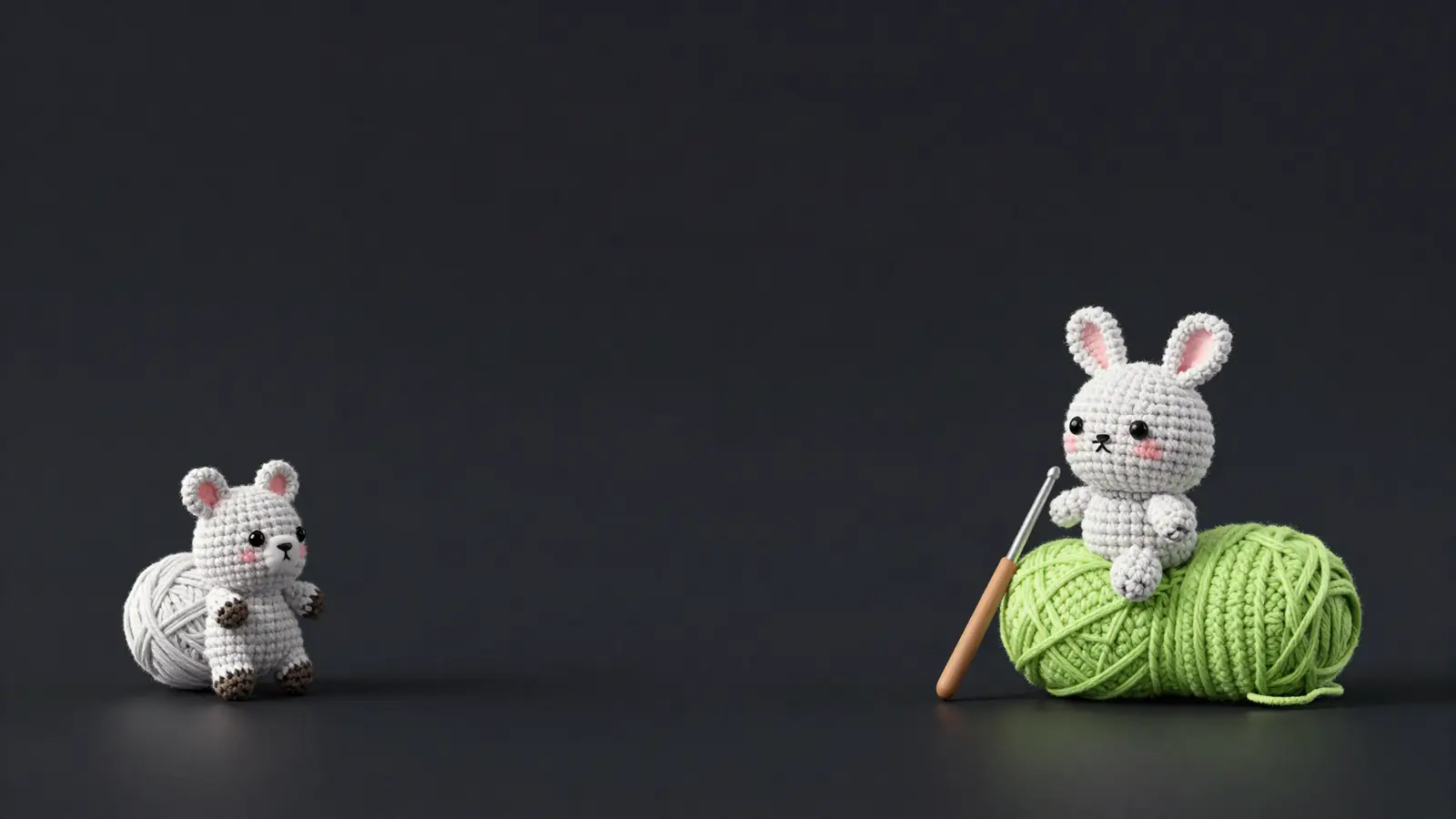
Amigurumi is one of the most popular things crocheters sell — and one of the most underpriced. A small plushie might use less than a skein of yarn, so it feels like it should be cheap. But the tight stitches, shaping, stuffing, facial details and assembly take real time. This guide shows how to price amigurumi from both materials and hours, with worked examples at three sizes.
How much should you charge for amigurumi?
Price amigurumi by adding yarn, stuffing, safety eyes and other supplies, packaging and a little overhead to your hours multiplied by an hourly rate, then adding profit. A small keychain piece taking one hour might price around $24, while a detailed 4-hour plushie can come to about $90 at $15 an hour.
The exact prices depend on your speed, rate and market, but the method keeps every piece paying for its time.
Why is amigurumi so time-consuming?
- Tight stitches for a firm, stuffing-proof fabric are slower to work.
- Many small parts — heads, limbs, ears, tails — each worked separately.
- Assembly — sewing parts on neatly and symmetrically.
- Faces and details — embroidery, safety eyes, color changes.
- Stuffing and shaping as you go.
None of that uses much yarn, which is why materials-based pricing rules undercharge amigurumi more than almost any other crochet. In our look at the 3× materials rule, a 4-hour amigurumi priced at 3× materials paid just $3.50 an hour.
What do worked examples look like?
All three use a 5% overhead, $0.50–$1.50 of packaging and a 20% profit margin.
| Small keychain | Medium plushie (faster) | Detailed plushie | |
|---|---|---|---|
| Yarn | $1.50 | $5.00 | $5.00 |
| Stuffing, eyes, extras | $1.00 | $2.00 | $2.00 |
| Time | 1 h × $15 | 3 h × $12 | 4 h × $15 |
| Packaging | $0.50 | $1.50 | $1.50 |
| True cost | $18.90 | $46.73 | $71.93 |
| Price | $23.63 | $58.41 | $89.91 |
The "faster" medium plushie shows two levers at once: a simpler design that takes an hour less, and a lower hourly rate while you're building speed.
What if customers won't pay those prices?
Look at what you can change without working for less:
- Simplify designs — fewer separate parts, embroidered details instead of sewn-on pieces.
- Get faster at your best sellers — repeating a design you know well cuts time noticeably.
- Offer a range of sizes — small pieces at accessible prices, larger ones for buyers who value them.
- Charge more for custom characters — designing from a photo or description takes extra time the first time.
What safety points should you know?
If you sell plushies intended for young children, product safety rules may apply — including small parts and labeling requirements. In the US, the Consumer Product Safety Commission publishes guidance for children's products. Safety eyes, buttons and small parts deserve particular care. Check the rules before marketing plushies as toys for young children.
Two related reads: how to price crochet items, and pricing crochet for Etsy vs craft fairs.