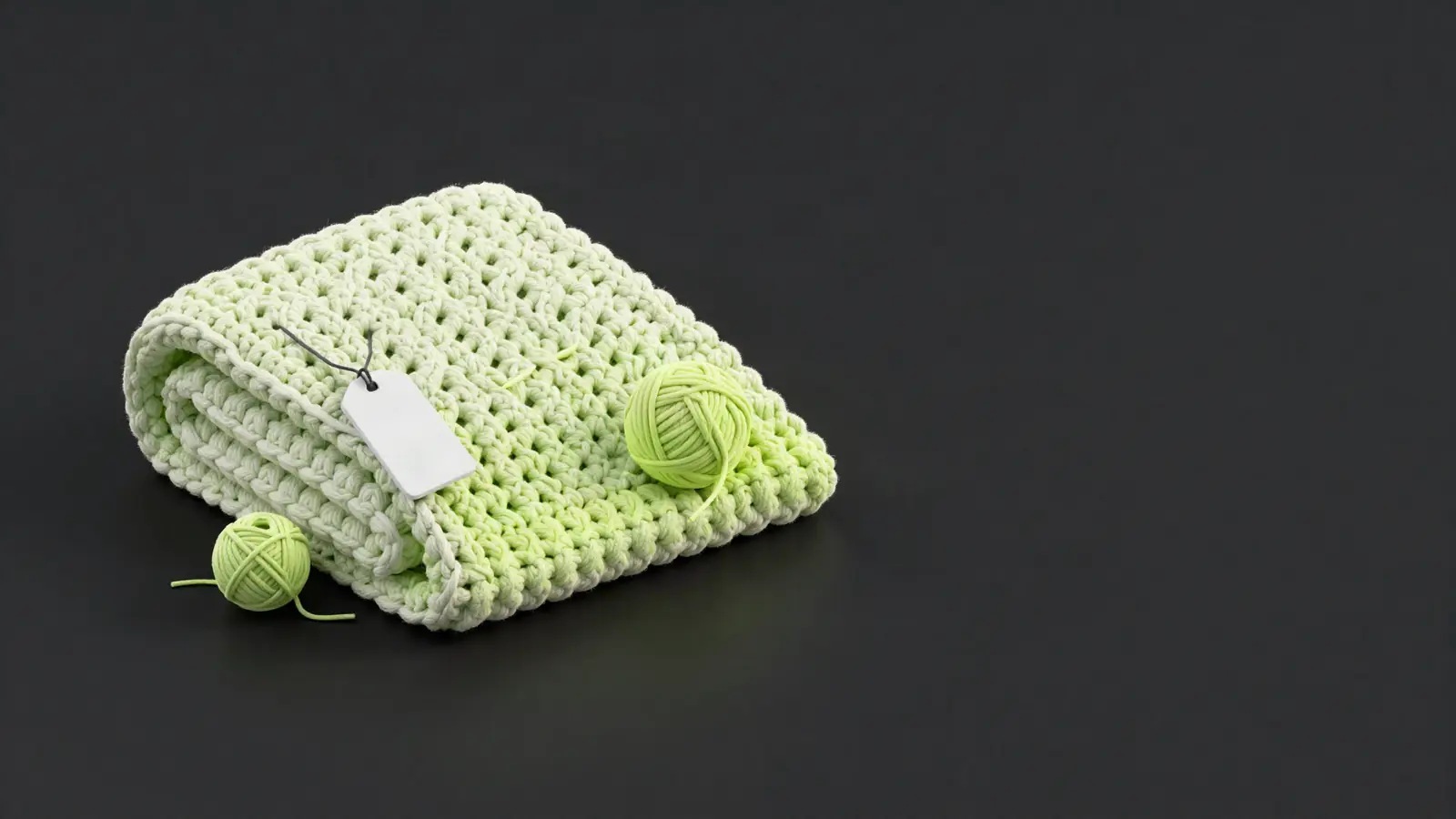
How much should you charge for a crochet blanket?
At $10–$15 an hour, an honest price is about $210–$289 for a baby blanket, $343–$474 for a lap blanket, $576–$806 for a throw and $978–$1,372 for a queen. Price a crochet blanket by adding the yarn, packaging and a small overhead to your hours multiplied by an hourly rate, then adding a profit margin. A throw using 12 skeins at $7 and taking 35 hours at $15 an hour comes to about $806, which is why many makers sell blankets as commissions or choose faster designs.
Price your own blanket with the free crochet pricing calculator →
Crochet blanket prices by size
These prices use the same method as the worked example below: $7 skeins, $5 packaging, 5% overhead and a 20% profit margin. The skein counts and hours are illustrative assumptions, not measurements. Your yarn weight, stitch and speed will change them, so time your own work.
| Size | Skeins | Hours | Price at $10/hour | Price at $15/hour |
|---|---|---|---|---|
| Baby | 5 | 12 | $210 | $289 |
| Lap | 8 | 20 | $343 | $474 |
| Throw | 12 | 35 | $576 | $806 |
| Queen | 20 | 60 | $978 | $1,372 |
Hours drive every row. Doubling the hours roughly doubles the price, while adding a few skeins barely moves it.
What does a full blanket calculation look like?
A throw-sized blanket, 12 skeins at $7, taking 35 hours:
| Cost | Amount |
|---|---|
| Yarn: 12 × $7 | $84.00 |
| Your time: 35 hours × $15 | $525.00 |
| Packaging | $5.00 |
| Overhead: 5% | $30.70 |
| True cost | $644.70 |
| Price at a 20% margin | $805.88 |
Your time is over 80% of the cost. There's no trick that makes 35 hours of skilled work cheap.
What happens if you price it at "what people will pay"?
Say you list that blanket at $250 because it feels like a normal price for a blanket. After the yarn and packaging, you'd earn:
($250 − $84 − $5) ÷ 35 hours = about $4.60 an hour
That's the hidden cost of pricing by feel: you're still paying for the blanket — with your time.
How can you make blankets worth selling?
The answer is usually to change the blanket, not the hourly rate.
- Use chunkier yarn or bigger hooks. If the same size blanket takes 12 hours instead of 35, the honest price drops a lot. With the same $84 of yarn, 12 hours comes to about $353 at a 20% margin — and at $250, you'd earn about $13.42 an hour instead of $4.60.
- Offer smaller sizes. Baby blankets and lap blankets take a fraction of the time.
- Sell full-size blankets as commissions. Custom colors and sizes justify the full price, and a deposit protects your time and yarn cost.
- Batch popular designs. Repeating a pattern you know well is faster than a new one every time.
- Sell the pattern, too. A written pattern earns from your design without costing hours per sale.
How should you price blankets for wholesale, markets and online?
Where you sell changes what you keep, so check the price for each channel before you commit.
- Wholesale to shops and boutiques. Shops usually expect to buy at about half the retail price, so they can double it. The 35-hour throw costs you $644.70 to make, so selling it to a shop for half of $806 ($403) loses money. For wholesale to cover your cost, its retail price would need to be at least $1,289. Even the faster 12-hour chunky version ($282.45 true cost) only works wholesale at a retail price of about $565 or more. Blankets rarely suit wholesale. Sell them direct.
- Craft fairs and markets. No marketplace fees, but booth fees, travel and a day of your time come out of the takings. Bring smaller, faster pieces alongside one or two blankets to show your work. Selling crochet on Etsy vs craft fairs compares the two.
- Online, through Etsy or your own site. Percentage fees bite hardest on big-ticket items like blankets (see the Etsy section below), and shipping a heavy blanket is expensive, so quote shipping by weight rather than guessing.
Should you charge a deposit for blanket commissions?
Many makers do, because a blanket represents a lot of yarn and hours before the buyer receives anything. A common approach is a deposit that at least covers materials, with the balance due before shipping. Put your timeline and policy in writing so both sides know what to expect.
How do Etsy fees affect a blanket sale?
On large-ticket items, Etsy's percentage fees add up. On an $806 blanket with free shipping, Etsy's US fees (listing, 6.5% transaction and 3% + $0.25 processing) are about $77 (Etsy's fee policy). If the sale came through an Offsite Ad, the extra fee is capped at $100 per order. How much Etsy takes per sale breaks it down.
FAQ
Crochet Pricing Calculator
Price your crochet so the hours you put in actually get paid — and see what the 3× materials rule really earns you.
Outgrowing Etsy?
Once a shop sells enough, its own store can cost less than Etsy's fees: around 134 orders a month for a typical $30 order. See where your break-even point is.

Written by
Founder, ToolsForge
Founder of ToolsForge and a WordPress & WooCommerce developer. Builds the free calculators on this site and writes the guides behind them — every guide pairs real, sourced numbers with a tool so you can run your own.