Cold process soap has a built-in delay: after you make it, it needs to cure before it's at its best. That's a quality question, but it's also a business question. Every curing bar is money you've already spent and can't get back until it sells. This guide explains why soap cures, how long it usually takes, and how to plan production, lead times and prices around it.
How long does cold process soap need to cure?
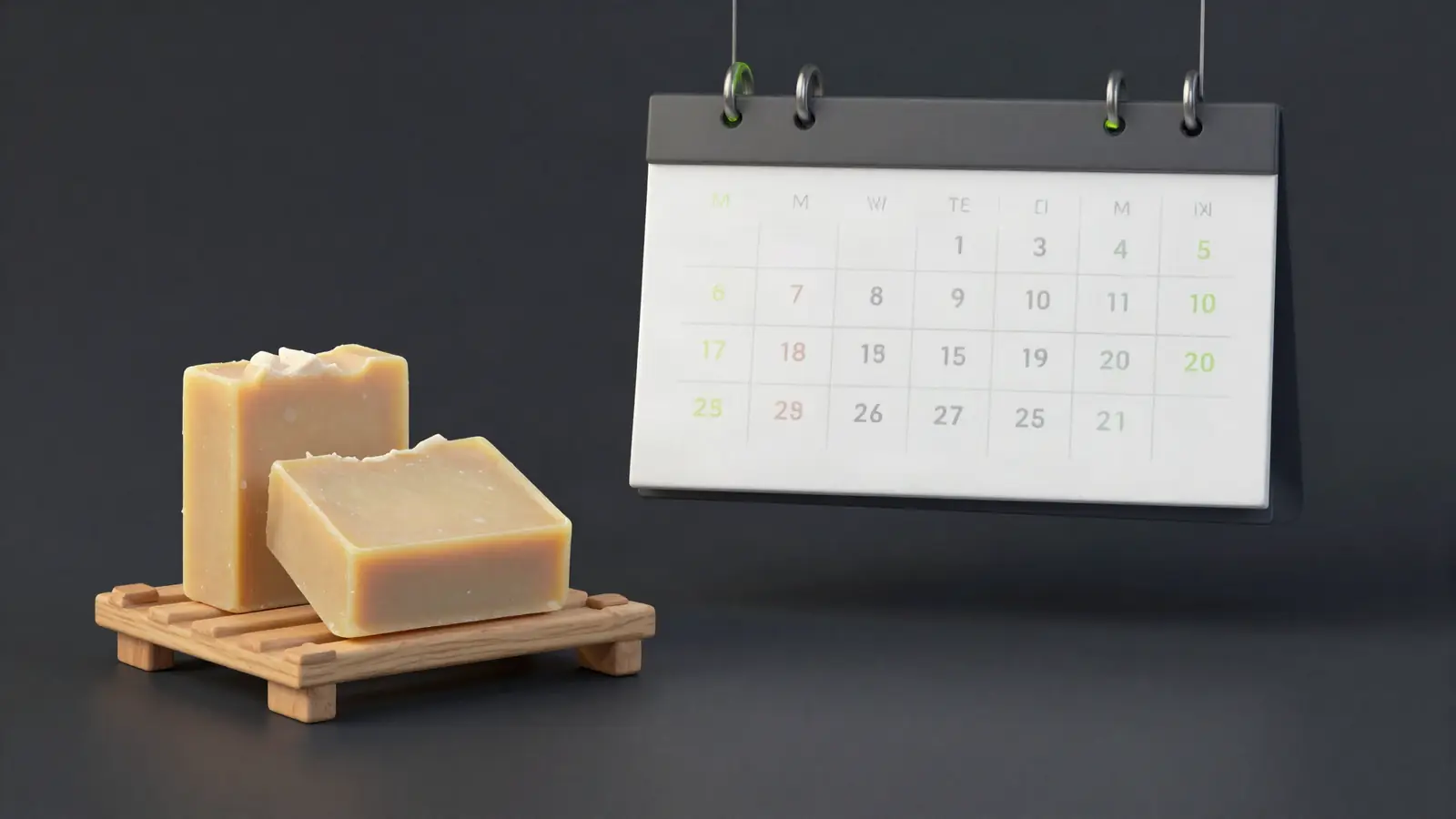
Cold process soap is commonly cured for around four to six weeks. The chemical reaction that turns oils and lye into soap is largely complete within a day or two, but curing lets excess water evaporate, producing a harder, longer-lasting bar. Resources like Soap Queen recommend a full cure for the best bar quality.
Some makers debate whether every recipe needs the full six weeks, but planning around a four-to-six-week cure is the safe default for selling.
Why does soap need to cure?
- Water evaporation. Fresh bars hold water from the lye solution. As it evaporates, bars get harder and last longer in use.
- Milder, more consistent bars. Curing gives bars time to settle into a consistent, well-performing product.
- Better customer experience. A properly cured bar doesn't turn soft and mushy in the shower as quickly.
Soap Queen's guide to soft soap explains how water content and curing affect bar hardness.
How much money is tied up in curing soap?
More than most makers realize. Using a true cost of $47.77 per 12-bar batch (about $3.98 per bar, including ingredients, packaging, time and overhead):
| Batches made per month | Weeks of cure | Batches curing at once | Money tied up |
|---|---|---|---|
| 4 | 6 | about 6 | about $287 |
| 10 | 6 | about 15 | about $717 |
| 20 | 6 | about 30 | about $1,433 |
That money has been spent on ingredients and your time but won't come back until the bars are sold — and bars sitting in stock after curing tie it up even longer. How much it costs to make a bar of soap explains where that per-batch cost comes from.
How should cure time affect your pricing?
Cure time isn't a separate line on your cost sheet, but it should influence a few pricing decisions:
- Don't price at the bare minimum. Money tied up in inventory is money you can't use elsewhere. A healthy margin compensates for waiting.
- Include curing space in overhead. Racks, shelving and space all belong in your overhead percentage.
- Charge for rush orders. If a customer wants a custom batch faster than your normal lead time allows, that's extra planning and priority — price it accordingly.
How do you plan production around cure time?
- Work backwards from demand. For holiday markets or wholesale orders, make soap at least six weeks before you need it.
- Keep a cured buffer. Popular scents should always have cured stock so you can fill orders immediately.
- Label batches with dates. Know exactly when each batch is ready.
- Quote honest lead times for custom and wholesale orders — see wholesale soap pricing for setting terms.
A related guide covers soap labeling rules for sellers.