One of the appealing things about soap making is that the ingredients can be relatively inexpensive, especially when you buy in bulk. But a bar of soap involves more than its ingredients — and once you count packaging, time and overhead, the cost per bar changes a lot. This guide breaks down the cost of a bar of cold process soap line by line, so you can see where your money and time actually go.
How much does it cost to make one bar of soap?
It depends on your recipe, bar size and batch size, but in the example below the ingredients come to about $1.24 per bar, and the true cost — including packaging, your time and overhead — is about $3.98. Your time is the single biggest part of that cost.
How do you calculate batch ingredient costs?
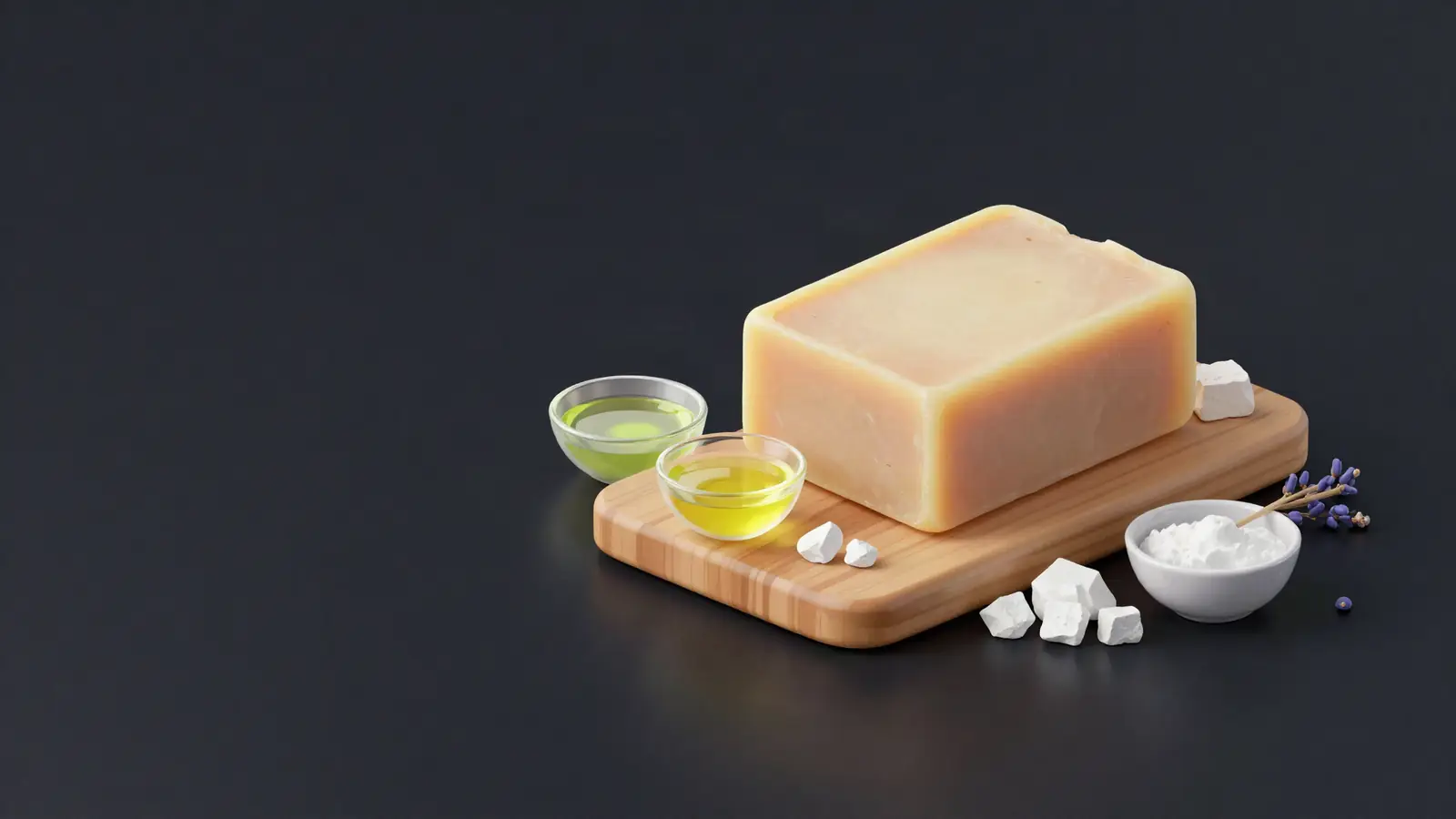
Start with the full recipe for one batch, using the weights from your lye calculator:
| Ingredient | Calculation | Batch cost |
|---|---|---|
| Oils and butters | 40 oz ÷ 16 × $3.00/lb | $7.50 |
| Lye (sodium hydroxide) | 5.7 oz ÷ 16 × $4.00/lb | $1.43 |
| Fragrance or essential oil | 2 oz × $2.00/oz | $4.00 |
| Additives (colorant, clay, botanicals) | For the batch | $2.00 |
| Batch total | $14.93 |
Divided across 12 bars, that's $1.24 per bar in ingredients.
Oils and butters are the largest ingredient cost here, but fragrance comes a close second — and premium essential oils can easily make fragrance the most expensive ingredient in the bar.
What's the full cost per bar?
| Cost per bar | Amount | Share |
|---|---|---|
| Your time: 1.5 h × $15 ÷ 12 | $1.88 | 47% |
| Ingredients | $1.24 | 31% |
| Packaging (wrap, label) | $0.50 | 13% |
| Overhead: 10% | $0.36 | 9% |
| True cost per bar | $3.98 |
Nearly half the cost is time. That's normal for small batches, and it's the reason larger batches make such a difference: mixing a double batch doesn't take twice as long.
Where can you save money per bar?
- Make bigger batches. Doubling to 24 bars in 2.5 hours brings time per bar from $1.88 to about $1.56, and cost per bar from $3.98 to about $3.64.
- Buy oils in bulk. Larger containers usually cost less per pound.
- Review your fragrance choices. Essential oils vary enormously in price; a few premium scents can raise your average cost significantly.
- Simplify packaging. A paper band and label can cost far less than a box.
What costs are easy to forget?
- Water and distilled water — small, but not free.
- Safety gear — gloves, goggles, and replacing them.
- Molds and equipment — stick blenders, scales, molds and cutters wear out.
- Curing space — racks and space for bars to cure for weeks before selling, covered in soap cure time and pricing.
- Failed batches — seized or separated batches cost the full ingredients.
An overhead percentage is a simple way to cover these without tracking each one. Equipment is also part of your startup spend, and whether soap making is profitable shows how many bars it takes to earn that back.
A related guide covers how to price handmade soap.